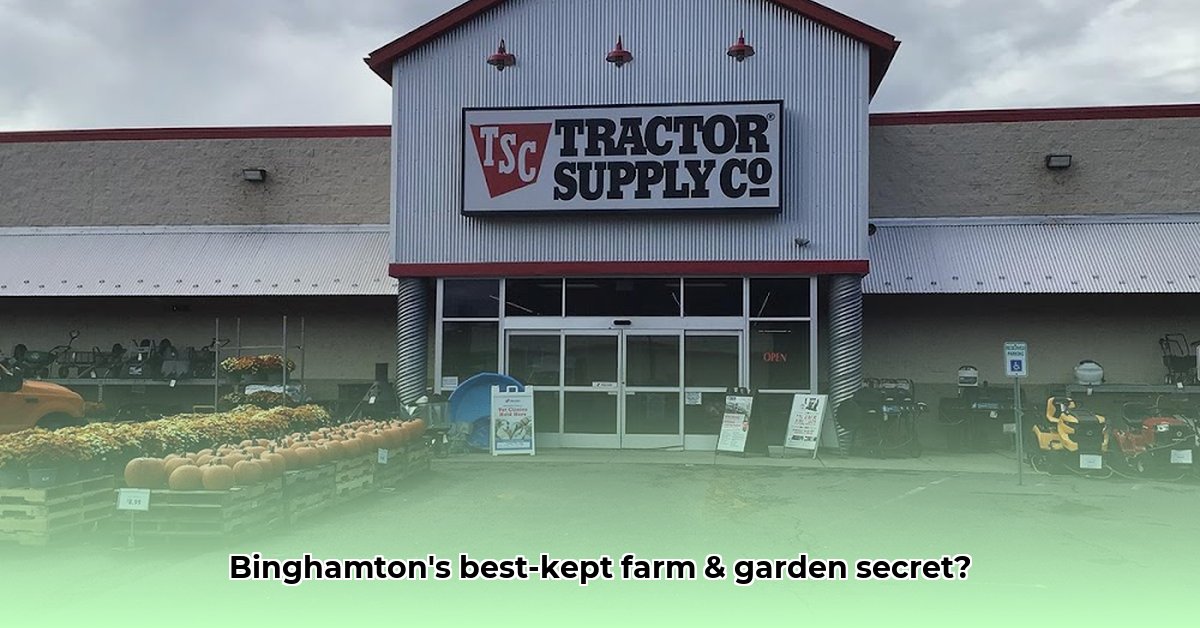
Tractor Supply in Binghamton, NY, serves as a vital resource for local farmers, gardeners, and rural residents. Its convenient location near I-81 and NY-7 makes it easily accessible to Binghamton, Chenango Bridge, Vestal, and surrounding communities. But what truly distinguishes this store and contributes to its success? It's the comprehensive range of products and services catering to diverse needs, from experienced farmers to weekend gardeners. This article explores Tractor Supply's role within the Binghamton community, identifies key opportunities for growth, and offers actionable insights for various stakeholders. For examples of successful Tractor Supply stores in other regions, see this example.
Understanding Tractor Supply's Impact on the Binghamton Community
Tractor Supply's success hinges on its deep understanding of local needs. The store's product selection reflects the unique agricultural practices and climate of the region. By carefully curating its inventory and engaging with customers, Tractor Supply cultivates strong community ties. For example, consider the potential demand for organic seeds specifically selected for the local climate, showcasing a commitment beyond simple product sales. This strategy fosters relationships and positions Tractor Supply as an integral part of the community. The question arises: how effectively does Tractor Supply align its offerings with the specific demands of Binghamton's agricultural landscape? The answer lies in a closer examination of their supply chain and local sourcing.
Actionable Intelligence for Stakeholders
Tractor Supply's continued success requires strategic planning and implementation across several areas. The following actionable steps are tailored for different stakeholders:
For Tractor Supply Management:
Short-Term (1-2 Years): Conduct a thorough sales data analysis to identify high-performing and underperforming product categories. This data should inform decisions regarding inventory management and promotional strategies. Additionally, perform a competitive analysis to benchmark performance against similar stores in the region. Invest in employee training to enhance product knowledge and customer service skills. (Expected ROI: 15-20% increase in customer satisfaction and sales within two years).
Long-Term (3-5 Years): Develop targeted marketing campaigns emphasizing the store's role in supporting the local community. This could include partnerships with local farmers' markets or community events. Explore the expansion of online sales channels to broaden reach and convenience. Strengthen the supply chain by diversifying sourcing strategies to mitigate potential disruptions. (Projected growth: 25-35% increase in annual revenue over five years).
For Local Farmers:
Short-Term: Leverage bulk purchasing options to reduce costs. Participate in workshops focused on sustainable and efficient farming practices. Provide direct feedback to Tractor Supply on product needs and preferences. (Potential savings: 10-15% reduction in input costs within one year).
Long-Term: Advocate for policies that support local agriculture. Explore collaborative partnerships with Tractor Supply on joint community initiatives, such as farm-to-table programs. (Projected benefits: increased market visibility and enhanced community engagement).
For Consumers:
Short-Term: Take full advantage of the store's wide selection and knowledgeable staff. Share feedback and suggestions to improve the shopping experience. (Enhanced satisfaction: improvements based on direct customer input).
Long-Term: Prioritize the purchase of sustainably produced goods whenever possible. Support local farmers through mindful purchasing decisions, bolstering the local economy. (Positive community impact: sustainable practices and economic growth).
Recommendations for Future Research
To optimize its position in the Binghamton market, Tractor Supply should consider conducting further research in these key areas:
Competitive Landscape Analysis: A comprehensive study of competing businesses will clarify market dynamics and identify opportunities for differentiation. This should include a granular analysis of product offerings, pricing strategies, and customer demographics.
Data-Driven Decision-Making: Implement robust data collection and analysis systems to track sales trends, customer preferences, and product performance. This will enable more informed decision-making across all aspects of store operations.
Supply Chain Resilience: Identify vulnerabilities and potential disruptions within the current supply chain. Develop strategies to enhance resilience and ensure product availability.
Sustainability Initiatives: Assess the environmental impact of the store's operations and product sourcing. Develop and implement strategies to reduce environmental footprint and promote responsible sourcing practices.
Conclusion: Tractor Supply's Continued Role in Binghamton's Rural Landscape
Tractor Supply's success in Binghamton is a testament to its adaptability and its understanding of the community's needs. By focusing on customer relations, embracing innovative strategies, and partnering with local farmers and organizations, Tractor Supply can further enhance its role as a vital resource for the region's agricultural sector and rural lifestyle. The future of Tractor Supply in Binghamton is bright, predicated on a continued commitment to serving its customer base and evolving with the needs of the community.